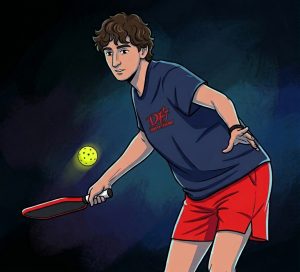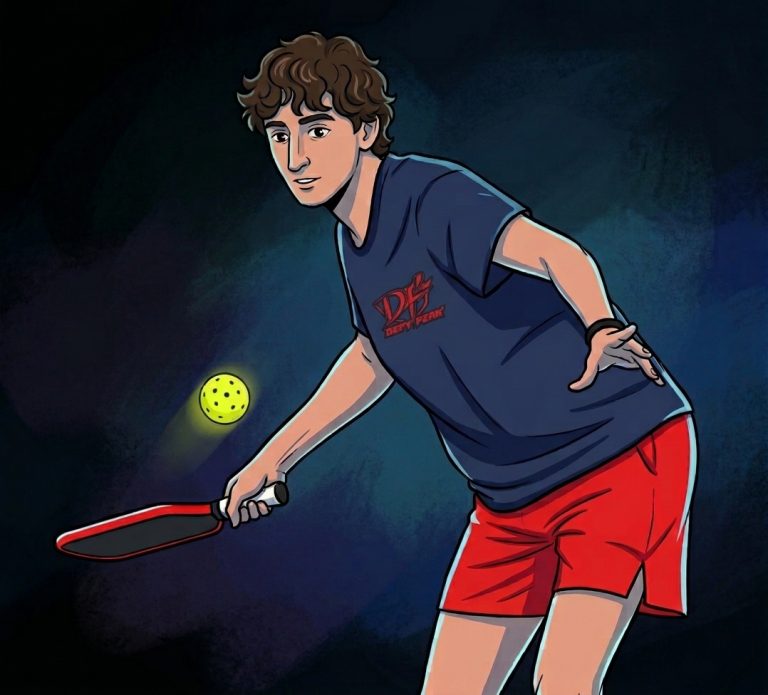





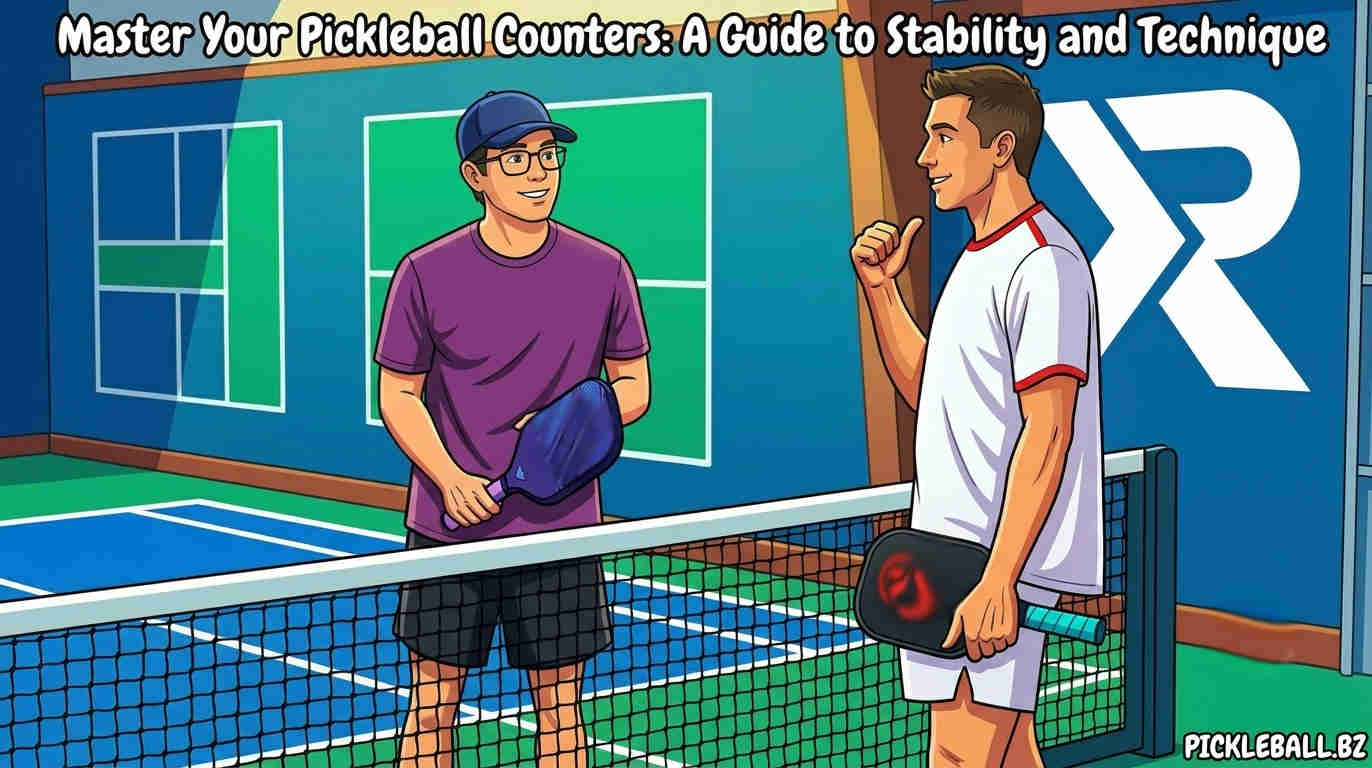
Improving your counter-attacking ability in pickleball requires more than just quick reactions; it demands control, stability, and smart decision-making. In a recent training session, pickleball pro Zane Navratil helped break down the common pitfalls players face when trying to improve their counters, focusing on how to minimize excess movement and optimize hand positioning.
The Foundation: Stability and Stance
One of the most significant barriers to effective counter-attacking is unnecessary body movement. When a player jumps, bobs, or weaves during a hands battle, they compromise their hand-eye coordination.
- Keep the Head Still: Much like high-level players, you should strive to keep your head stationary during exchanges. A stable head provides a consistent focal point, which is essential for tracking the ball and maintaining balance.
- Plant Your Feet: To eliminate the habit of jumping or moving around unnecessarily, practice staying in an athletic, grounded stance. Even if a ball is slightly out of reach, resist the urge to move your feet. This helps you build a habit of staying composed during high-pressure exchanges.
- Minimize Torso Movement: Beyond keeping your feet planted, avoid over-rotating or swaying your torso. Focus on moving only your arms and paddle to meet the ball, which keeps you balanced and ready for the next shot.
Refining Your Ready Position
How you prepare your paddle before a shot drastically impacts your power and consistency. Many players make the mistake of extending their arms too far out in front in their ready position.
- Bring the Elbows In: When your arms are fully extended, it is difficult to generate power, often forcing you to overcompensate with your body. By tucking your elbows in slightly, you create a more compact, stable position. This adjustment helps prevent “chicken winging” and allows you to generate controlled, effortless power.
- The “Coil” Technique: On two-handed backhands, your power should come from a coil-and-uncoil motion originating from your core, rather than just swinging with your arms. Keeping your movements compact ensures you can recover quickly to the center of the court after your shot.
Choosing Between One-Handed and Two-Handed Counters
A common dilemma for many players is deciding whether to use a one-handed or two-handed counter. The key is understanding your positioning relative to the ball:
- Reaching Wide: If you are reaching significantly for the ball, use a one-handed counter. Trying to use two hands when stretched too far out limits your reach and range.
- In the Slot: When the ball is in your “slot” (in front of your body but not at your extremes), a two-handed counter is often the best choice for stability and power.
- Close to the Body: As the ball gets closer to your body, it becomes difficult to maintain the mechanics for a two-handed shot. In this situation, transition to a one-handed motion to snap the ball back effectively.
Training for Success: The “Six Ball” Drill
To turn these concepts into muscle memory, Zane recommends the “six ball” drill. By having someone feed you six balls in rapid succession, you are forced to focus on:
- Staying in a stable, compact ready position.
- Executing the coil-and-uncoil motion efficiently.
- Avoiding big, sweeping arm movements that leave you out of position.
This drill simulates the speed of a real-game hand exchange, teaching you to snap back to your neutral ready position immediately after every shot. By training this way, you improve your ability to handle multiple quick shots in a row without sacrificing your form or control.