





Breaking the Chain: How to Escape the Isolation Play in Pickleball
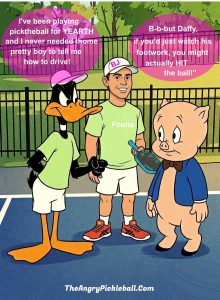
Getting targeted and frozen out of a pickleball rally is one of the most frustrating experiences on the court. When opponents figure out they can pin you in a crosscourt dinking battle while your partner stands idle at the kitchen line, it’s easy to feel stuck.
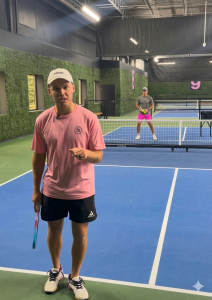
In a recent strategy breakdown, professional player and multi-time champion Zane Navratil shared tactical adjustments and specific ball placements to disrupt your opponents’ patterns, regain control, and get your partner back in the game.
1. The Right Side Isolation: Tactical Placements
When you find yourself isolated on the right side of the kitchen line, hitting passive, predictable dinks will keep you trapped. Instead, Navratil suggests five strategic targets to break the rhythm:
- The Aggressive Crosscourt Dink: Instead of keeping the ball soft and routine, change the pace and depth. An aggressive, low dink forces a more difficult response, increasing the likelihood that your opponent pops the ball up for your partner to clean up.
- Directly to the Diagonal Player: Hitting straight up the middle directly at the player opposite you doesn’t instantly break the pattern, but it effectively takes away their sharp hitting angles. This allows your partner to slide over and look for a poach.
- The Crosscourt Backhand: Funneling the ball into your opponent’s backhand generally means the ball will come right back to you, but it serves a larger purpose. Forcing them into a weak backhand defense opens up the rest of the court, giving you the space to pull them wide or drop an aggressive crosscourt winner.
- The Middle Dink: Attacking the center of the court is highly effective for breaking isolation. By forcing the player directly in front of you to move inward to cover the middle, their natural physical momentum makes it easiest for them to hit their next shot toward your partner. Caution: Ensure this is a precise, high-quality dink. A lazy ball in the middle opens you up to an aggressive speed-up from your opponents.
- The Down-the-Line Dink: This is an immediate breakout shot, but it must be executed strictly on your terms—either off a neutral or an offensive ball. If you hit down-the-line out of desperation on a difficult ball, you risk getting punished by an “Erne”. When hit well, your partner should automatically shift to the middle to cover the open space, pulling them directly into the play.
2. Exploiting Predictability
When you know your opponents are committed to hitting every ball to you, use that predictability to your advantage. Navratil points out that there is no need to exert energy trying to recover to the center of your box after every shot if the ball is guaranteed to return to the outer edge. Shift your physical positioning slightly toward the direction of their attack. This adjustment keeps you balanced, improves your shot quality, and builds confidence during extended rallies.
Additionally, knowing exactly where the ball is going lets you lean in and proactively initiate your own offense. Speeding up a predictable ball shifts the pressure entirely onto the defensive team.
3. Macro Adjustments and Stacking
If soft-game placements aren’t working, you may need to adjust your overall game structure:
- Stacking: The ultimate structural solution to isolation is to switch sides entirely. Stacking allows you and your partner to realign based on your preferred sides and forces your opponents to calculate completely new hitting lanes.
- Preempting the Kitchen: Stop the isolation before it starts by playing more aggressively from the baseline and mid-court. When serving, utilize a “drive and crash” strategy—hitting a hard third-shot drive and sprinting to the net behind it—to disrupt their rhythm. On the return side, push the action early on the fourth and sixth shots. If you are already losing the isolation battle at the kitchen, escalating the pace early in the rally is a risk worth taking.
4. The Breakout Drill
To practice these skills, Navratil utilizes a live, four-player scenario. In this drill, the opposing team is instructed to strictly isolate one player. The isolated player’s sole objective is to use the five target placements—specifically testing out middle and down-the-line dinks—to successfully pull their partner into the live rally or force an unforced error.
Ultimately, while you cannot control your opponents’ intentions, you can force them into hitting highly difficult, sub-optimal shots. By shifting the pressure back onto them, you stand a much better chance of turning a defensive freeze-out into a winning rally.