





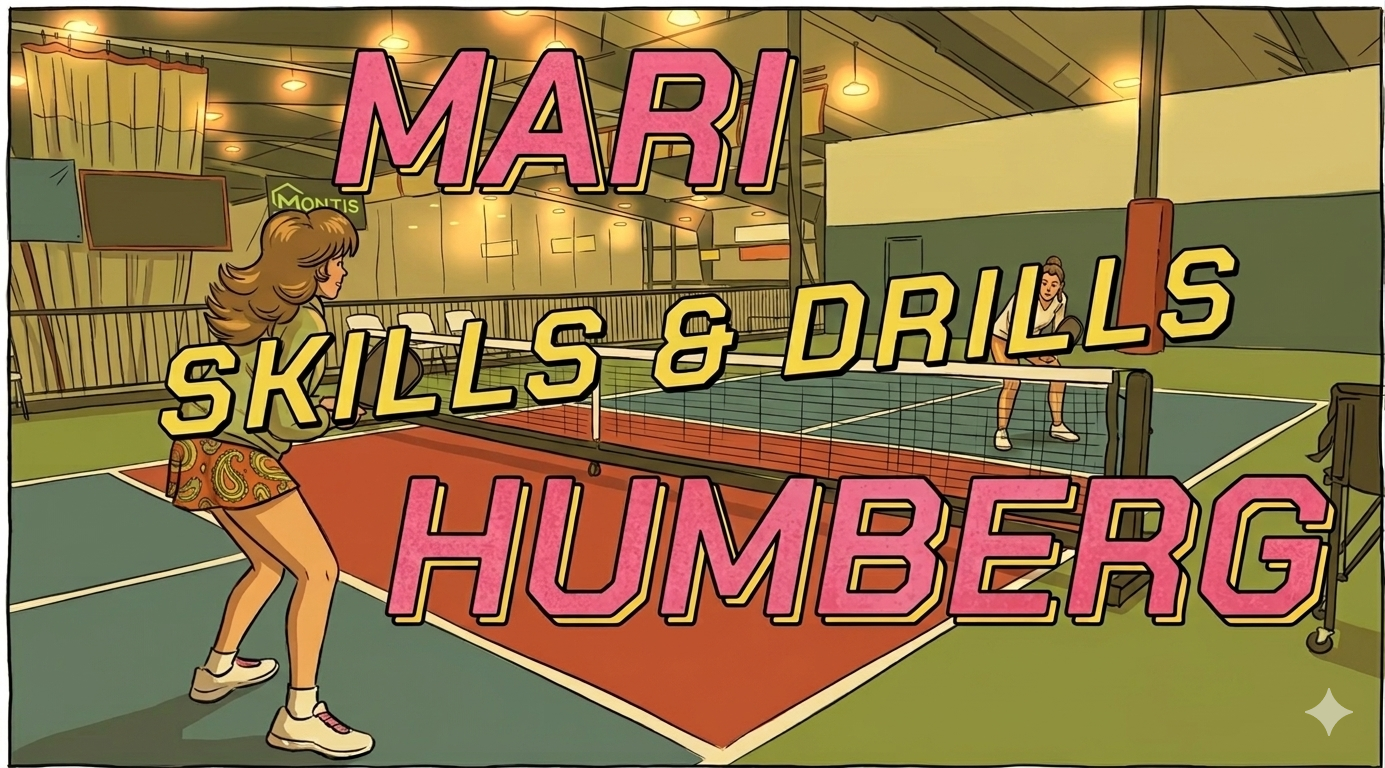
For many pickleball players, drilling has a bad reputation. It is often written off as tedious, painful, or downright boring compared to the thrill of open gameplay. However, professional pickleball player Mari Humberg argues that drilling shouldn’t be a chore—in fact, it is the absolute foundation of building rhythm, touch, and match-ready execution.
In her ideal daily training schedule, Humberg prioritizes a two-hour drilling session in the morning, followed by a two-hour gameplay session in the afternoon and a dedicated gym workout. By establishing her rhythm early in the day, she creates a safe environment to test shots and build muscle memory that naturally translates into competitive matches later.
To elevate your soft game, Humberg shares two foundational dinking sequences that she has utilized since the start of her pickleball journey. The secret to their success? Intention.
1. The 100-Dink Consistency Drill
The first sequence is a rigorous warm-up designed to build relentless consistency and physical endurance. While many players casually tap the ball back and forth to warm up, Humberg emphasizes that aimless dinking does absolutely nothing to improve your game.
The Setup
Working with a drilling partner (or a ball machine), the goal is to hit 100 quality dinks in a row without a single mistake. This is broken down across the four primary directions on the kitchen line:
- Down-the-line (right side)
- Down-the-line (left side)
- Crosscourt (right-to-left)
- Crosscourt (left-to-right)
To make the drill effective, players must treat every single repetition as a match-quality shot. This means staying low, moving your feet, finding your balance, and re-establishing your position after every contact. If done correctly, even a 30-shot sample should leave you noticeably out of breath.
Common Mistakes to Avoid
- The Lazy Exchange: Handing your partner easy, un-attackable “rainbow” dinks just to keep the count going. You must push each other and make your partner struggle to retrieve the ball.
- Creating Bad Habits Down-the-Line: When dinking down-the-line, avoid pushing the ball too far into the middle of the court. Doing so forces your partner to take a middle ball with their backhand, creating poor positional habits.
- Camping on Crosscourt Dinks: A frequent error during crosscourt exchanges is sliding out wide to hit a dink and staying there. This leaves the entire middle of the court wide open. Every crosscourt dink requires you to recover and protect your space.
Adding Pressure: The “Three Lives” Variation
Because hitting 100 consecutive dinks can feel daunting, Humberg suggests adding gamified stakes. Give yourself and your partner three “lives” each. Every time a player misses, they lose a life and the count restarts. To make it fun, the person who runs out of lives first has to face a lighthearted penalty, such as a round of “butts up.” Adding a penalty introduces a layer of psychological pressure that mimics a real tournament environment.
2. The Non-Attackable Dinking Game
Once the consistency baseline is met and your body is thoroughly warm, it is time to transition from cooperation to competition. The second drill is a specialized mini-game played to five points.
The Rules
You and your partner play as direct opponents, actively trying to construct points and move each other out of position. However, there is one catch: no matter how high the ball bounces, nobody is allowed to attack or speed up the ball. ### Why It Works Players often question the utility of a drill that forbids attacking a high ball. Humberg explains that this constraint is exactly how advanced players master ultimate ball control. When you cannot rely on a raw power shot to win a point, you are forced to learn how to roll the ball, manipulate angles, and utilize heavy pressure to move your opponent until they physically cannot reach the ball.
This drill simulates the exhausting, non-stop mental pressure of a high-level pickleball rally. It forces you to defend from “in shambles” positions and scramble across the court while maintaining soft touch.
Final Thoughts
Whether you are practicing solo with a ball machine, working with a drilling partner, or warming up with your dedicated doubles partner, introducing these drills into your routine will transform your kitchen play. By moving away from mindless hitting and leaning into intentional, high-intensity drilling, you will step onto the court for your next match feeling incredibly warm, sweaty, and ready to place the ball anywhere you want.